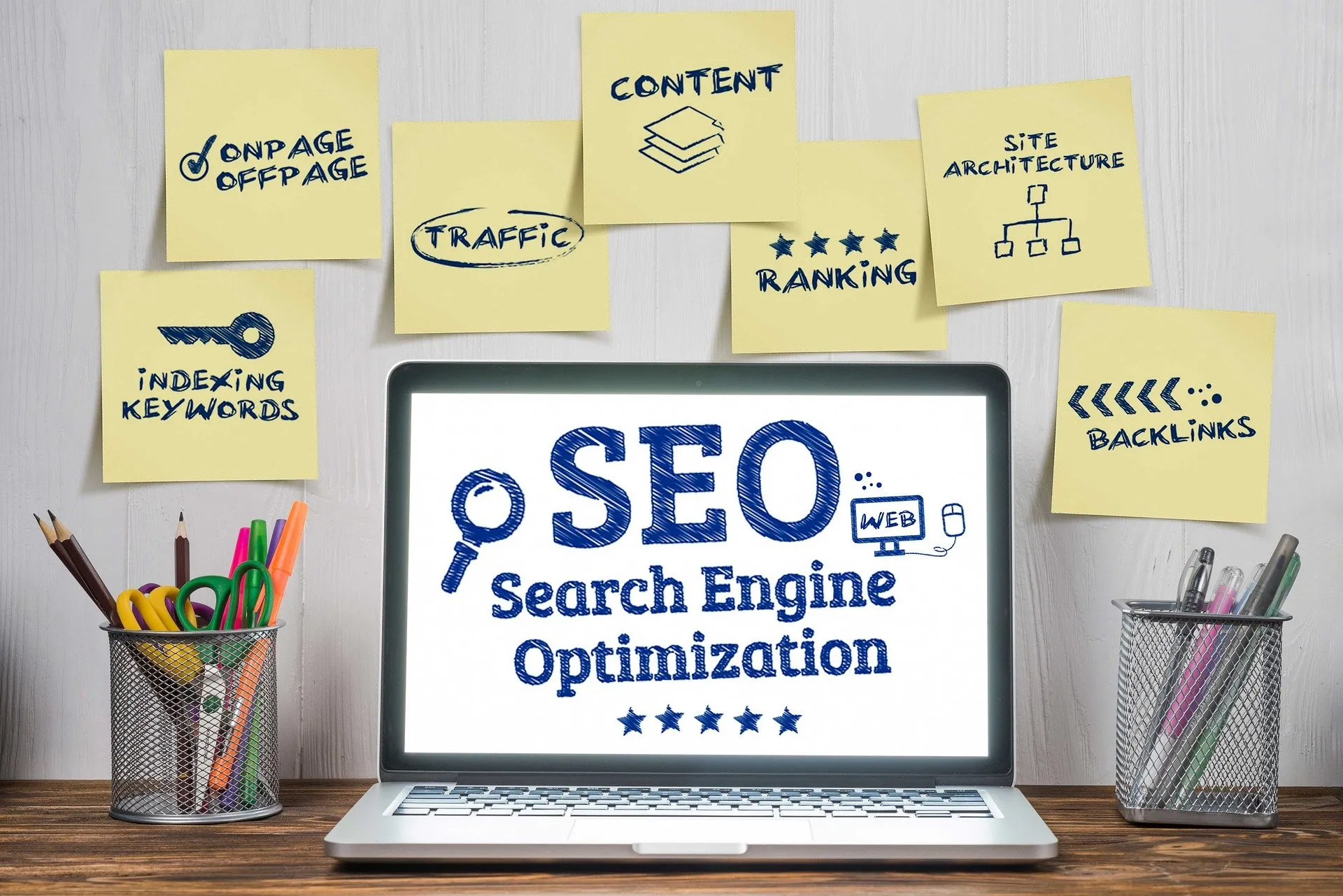
Quick Answer: There are 2 paths to Google’s first page. Google Ads puts you there immediately for a cost-per-click that typically runs $2 to $50+ depending on your market. Organic SEO gets you there over time, usually 3 to 12 months, at a monthly agency investment of $2,000 to $10,000+. They work differently, cost differently, and serve different goals. Both can be worth it. Only one compounds over time.
Most agencies will dodge this question. They’ll talk about custom strategies and market variables and circle back around to “it depends.” All of that is technically true, and also somewhat convenient for them.
Here’s the real answer.
Getting on Google’s first page costs money, time, or both, depending on the path you choose. This page breaks down exactly what each option costs, how long it takes, and what actually produces a return.
The 2 Ways to Get on Google’s First Page
Google’s first page has 2 zones: the paid results at the top (marked “Sponsor”) and the organic results below them. Getting into either one requires a different strategy, a different budget, and a different timeline.
Path 1: Google Ads (Pay-Per-Click)
Google Ads, also called PPC or paid search, lets you bid to appear at the top of the results page for specific keywords. You pay each time someone clicks your ad. There’s no wait, no ramp-up period. You set a budget, the ads go live, and your phone can start ringing the same day.
What it typically costs:
- Cost-per-click ranges from $2 to $50+ depending on how competitive the keyword is
- Highly competitive industries like healthcare, legal, and finance tend toward the higher end
- Monthly ad spend for a local business typically starts at $1,000 to $3,000 and scales from there
- Agency management fees typically add $500 to $2,000+ per month on top of ad spend
The tradeoff: the moment you stop paying, you disappear. PPC is a faucet, not a foundation. Turn it off and the water stops. For that reason, most businesses use it alongside SEO, not instead of it.
Arcane Marketing’s PPC clients average $4.14 back for every $1 spent after 4 or more months under management. That’s not magic, that’s consistent execution.
Path 2: Organic SEO
Organic SEO is the practice of earning rankings in the non-paid results through a combination of technical optimization, quality content, and authority signals like backlinks and reviews. You don’t pay Google to rank. You earn it.
It takes longer. Real movement typically happens in 3 to 6 months. Meaningful results usually show up at the 6 to 12 month mark. But here’s what makes it different from paid: when it works, it compounds. A page that ranks well today can keep driving traffic for years without you spending another dollar to maintain it.
What it typically costs:
- Monthly retainers at reputable agencies start around $1,000 to $2,000 for basic local SEO
- Competitive markets and multi-location businesses typically invest $2,000 to $10,000+ per month
- Enterprise-level SEO campaigns can run $10,000 to $25,000+ per month
- Doing it yourself requires significant time investment: 10 to 20+ hours per month of focused work
Arcane Marketing’s SEO clients see an average ROI of 320%+ after 12 months. The average client stays with us for 36 months. The industry average for agency retention is 5 months. The gap between those two numbers tells you something about what consistent, compounding SEO actually delivers.
What Makes SEO More or Less Expensive

The range of SEO pricing, $500 a month on the low end to $25,000+ at the enterprise level, confuses a lot of people. Here’s what actually drives that number and why modern strategies like AI SEO is starting to influence costs as well.
Market competition:
Ranking for “dentist in Boise” is a different effort than ranking for ”dentist in Los Angeles.” More competitors, more content, more authority work required, higher cost. This is the single biggest driver of price.
Number of locations:
A single-location business needs 1 optimized presence. A 5-location group needs 5. Local SEO scales with your footprint.
Your website’s current state:
A well-built, technically clean website takes less work to rank than one with broken pages, slow load times, and zero existing authority. If your site needs a full rebuild before SEO can even start, that’s a real cost to account for.
The keywords you’re targeting:
Local “near me” queries are usually more achievable than broad national terms. The broader the keyword, the more content, links, and authority you need to compete.
Your history:
If a previous agency used low-quality tactics or your site has been penalized, there’s cleanup work required before growth can happen. That adds time and cost at the front end.
How Long Does It Actually Take to Rank on Google’s First Page?
Anyone guaranteeing first-page results in 2 weeks is either lying or targeting keywords nobody searches. Real SEO has a real timeline.
- Months 1 to 3: Foundation work. Technical fixes, content gaps addressed, tracking set up properly so you actually know what’s working instead of guessing. This is not glamorous. It is necessary.
- Months 3 to 6: Rankings start moving. Impressions increase in Google Search Console. Traffic starts climbing, slowly at first.
- Months 6 to 12: Meaningful results. First-page rankings for primary keywords, measurable increase in leads or patients, ROI starts becoming visible.
- 12 months and beyond: Rankings hold and improve, authority builds, the cost per new lead goes down. This is where SEO pays for itself.
The businesses that get the best results from SEO are the ones that treat it as an investment with a 12-month horizon, not an expense with a 30-day expectation.

Can You Get on Google’s First Page for Free?
Yes, with important context.
You can get your website indexed and ranked on Google without paying Google anything directly. Organic search is free in that sense. You can also claim your Google Business Profile at no cost, which gives you a shot at appearing in the local map results.
What isn’t free is the work it takes to rank competitively. Creating the right content, optimizing your pages, building authority through links and reviews, fixing technical issues, staying consistent month after month: that work either costs money if you hire someone to do it, or it costs significant time if you do it yourself.
For most business owners, especially those running healthcare practices, spending 15 to 20 hours a month becoming a competent SEO practitioner is not a realistic option. The time cost alone usually exceeds what a professional would charge.
What Real Results Look Like
Arcane Marketing was founded in 2015. Over 10 years and 1,000+ businesses served, the outcome data is consistent: clients who invest in SEO for 12 or more months see an average revenue increase of 320%+ from their organic channel. Clients stay with us for an average of 36 months, compared to an industry average of 5 months.
That retention gap is the most honest metric we have. Practices don’t keep paying an agency for 3 years because the reports look nice. They stay because the patients keep coming in.
Arcane Marketing is also a Google Premier Partner, which means we manage a significant portfolio of ad spend at a level Google recognizes. Our team of 20+ is entirely U.S.-based and in-house. No outsourcing. No white-labeling. The people you talk to are the people doing the work.
Our specialty is healthcare: medical practices, dental groups, med spas, specialty clinics, and multi-location organizations. If you operate in that space and your current marketing isn’t producing results, we have a track record that speaks for itself.
Frequently Asked Questions
How much does it cost to get on the first page of Google?
It depends on the method. Google Ads typically costs $2 to $50+ per click depending on your industry and market, plus agency management fees of $500 to $2,000+ per month. Organic SEO retainers at reputable agencies range from $1,000 to $10,000+ per month, with investment level driven by how competitive your market is and how many locations you operate. Both can produce a strong return when executed correctly.
How long does it take to get on the first page of Google?
With Google Ads, you can appear on the first page the same day your campaign launches. With organic SEO, expect 3 to 6 months to see meaningful movement and 6 to 12 months for consistent first-page rankings on your primary keywords. Timelines vary based on market competition and the current state of your website.
Can I get on Google’s first page without paying?
You can rank organically without paying Google directly. However, the work required, content creation, technical optimization, link building, and ongoing maintenance, either costs time or money. Most business owners find that the time required to do it effectively is not realistic on top of running a practice or company.
What is the difference between SEO and Google Ads for first-page rankings?
Google Ads puts you at the top of the page immediately, labeled as a sponsored result, and you pay each time someone clicks. Organic SEO earns placement in the non-paid results below through content quality and authority signals, takes longer to build, but does not require a per-click payment once rankings are established. Most businesses benefit from both running together.
How much does a healthcare practice typically spend on SEO?
Healthcare practices working with Arcane Marketing typically invest $2,000 to $10,000+ per month in SEO, depending on market competition, number of locations, and current site health. Single-location practices in mid-sized markets often start in the $2,000 to $4,000 per month range. Multi-location groups or those in major metro markets invest more.
Is SEO worth the investment compared to running Google Ads?
For most businesses with a long-term mindset, yes. SEO builds an asset: once rankings are established, they continue producing traffic without a per-click cost. Google Ads produces results faster but stops the moment you stop paying. The strongest marketing strategies use both. Arcane Marketing’s SEO clients average 320%+ ROI after 12 months. That number is hard to argue with.
What does a first-page Google ranking actually mean for my business?
First-page rankings, especially positions 1 through 5, capture the large majority of clicks for a given search. If someone searches for your service in your area and your competitor is on page 1 and you’re on page 3, they are getting those calls. A first-page ranking in a competitive healthcare market can mean dozens to hundreds of additional patient inquiries per month.